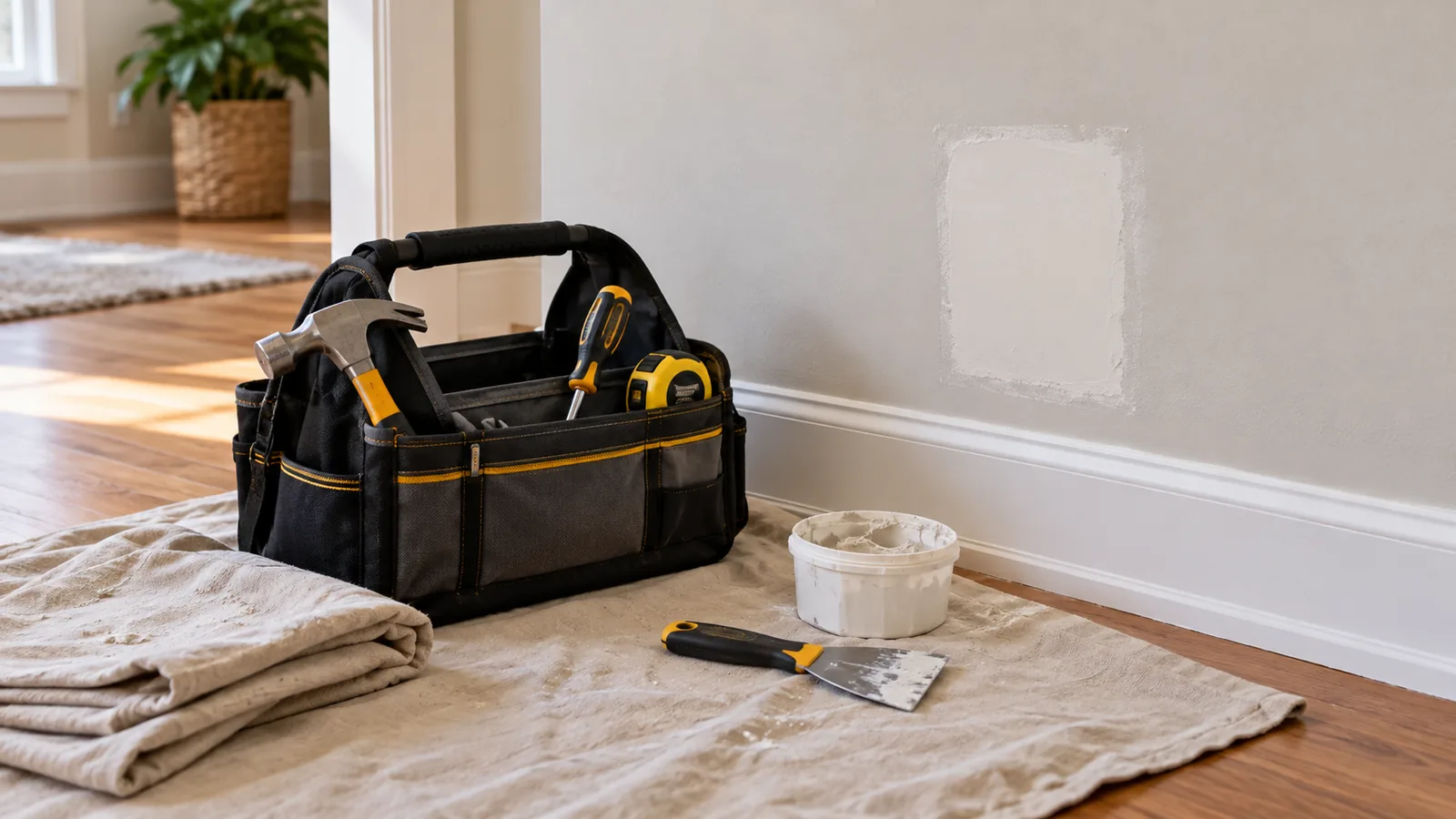
Determine Whether the Texture Is Damaged or the Drywall Underneath It
A chipped or scraped texture layer can be a finish repair. A hole, cracked joint or damaged section of drywall needs a substrate repair before texture is reapplied. Treating the visible pattern without fixing the underlying defect usually leaves the project incomplete.
When the board itself needs repair, use Drywall Repair & Patching first.
Matching an Existing Texture Is a Visual Blend Problem
Texture has pattern, density, scale and randomness. A repaired area can use the same general texture type and still stand out if the application is too heavy, too fine or too sharply contained. The blend may need to extend beyond the exact repair so the transition is less obvious.
Lighting and viewing distance affect how successful that blend appears.
Walls and Ceilings Show Repairs Differently
Ceiling texture is often seen across a larger uninterrupted field and can be exposed by side lighting. Wall texture may be interrupted by furniture, openings and trim. The repair approach should account for where the surface is located and how light crosses it.
A ceiling repair should not automatically copy the same blend area used on a small wall patch.
Orange Peel, Knockdown and Other Textures Need Different Handling
Texture types are created with different application and finishing methods. A knockdown pattern has a visible flattened profile, while orange-peel-type finishes read through smaller repeated texture. The existing pattern should be identified before the repair is attempted.
If the project is specifically about creating or renewing knockdown texture, use Knockdown Texture instead of the general repair page.
Prime and Paint After the Texture Is Stable
Fresh texture and surrounding painted surfaces can absorb finish differently. Primer may be needed to normalize the repaired area before the final paint is applied. The paint-ready handoff should occur after the texture has reached the desired profile and is suitable for coating.
For final room painting, continue to Interior Painting.
Know When Matching Is the Wrong Goal
A surface with many repairs, inconsistent old texture or widespread damage may be better treated as a full-surface project. Skim coating can create a smooth new plane, or a larger retexture can establish a consistent finish instead of adding another isolated patch.
Use Skim Coating when leveling the entire surface is the better solution.
Texture repair sits inside the broader Surface Preparation & Repairs family, but the page stays focused on rebuilding an existing texture. When the customer wants the old ceiling texture removed rather than matched, popcorn ceiling removal becomes the more direct service path.
FAQ
Can repaired texture be made invisible?
The goal is to blend the repair into the surrounding texture, but existing age, paint buildup, pattern and lighting can affect how closely it matches.
Does texture repair include drywall repair?
Surface damage may require drywall repair first. The two scopes should be separated when the substrate itself is damaged.
Can old texture be removed instead of repaired?
Yes, depending on the desired final finish. Popcorn removal or skim coating may be better when the customer wants to change the whole surface.
Where is texture repair available?
FL-GoodHome serves Hollywood, Broward County and nearby South Florida.