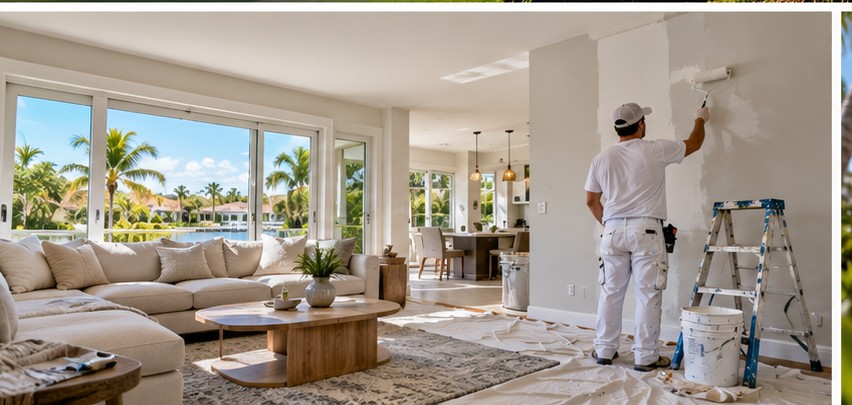
Exterior Surfaces in South Florida
Exterior painting can cover stucco walls, siding, wood details, trim, fascia, doors and other paintable building surfaces. The important first question is whether the existing substrate is stable enough for ordinary painting preparation. Chalking, peeling, cracks, failed joints, loose material or persistent staining can change the scope. For a broader view of finish options and adjacent painting work, use the Painting section.
Cleaning and Surface Preparation
Exterior surfaces collect dust, biological growth, chalk, airborne residue and other material that can interfere with adhesion. Cleaning should match the substrate and the condition of the existing coating. Where appropriate, pressure washing can be part of the preparation path, but cleaning alone does not correct cracks, delamination or deteriorated substrate. Those conditions need to be identified before primer and finish decisions are made.
Stucco, Cracks, Caulk and Wood Conditions
Hairline surface issues and routine preparation are different from damaged stucco, open joints or deteriorated wood. Areas that are cracked, loose or separated should be evaluated before they are covered. If the problem is concentrated in the stucco itself, review stucco repair. Open seams and joints may point to a separate caulking and sealing scope.
Primer and Finish-Coat Decisions
Primer choice depends on the surface, the existing coating and the condition left after cleaning and repair. Bare or repaired areas often have different preparation needs from intact previously painted surfaces. The finish also has to suit the exposure and the substrate. The coating decision should follow what is actually being painted and what the surface shows during preparation.
UV, Humidity, Rain and Salt Exposure
Sun and moisture are constant exterior factors in Broward County. UV exposure can fade and degrade coatings, while frequent rain and humidity make cracks, joints and moisture paths more important to inspect. Properties closer to the coast may also experience salt exposure on exterior surfaces. These conditions do not automatically require a specialized restoration system, but they are part of deciding whether routine repainting is enough.
When Waterproofing or Restoration Becomes a Separate Scope
Repainting renews a finish on a suitable substrate. Recurring water entry, failed protective systems, spalling, deeper deterioration or conditions that exceed surface preparation can call for a different service. In those cases, review waterproofing or the relevant restoration page before treating the problem as a standard paint job. The goal is to keep a finish project from masking a condition that needs another type of work.
Exterior Details and Adjacent Surfaces
A house or building exterior is rarely one uniform material. Walls, trim, doors, railings, wood details and coated concrete may meet in the same elevation but need different preparation. A useful scope separates those surfaces rather than assuming one treatment for everything. If you are planning several exterior services together, call (223) 226-1828 and describe the materials and visible conditions.
FAQ
Does an exterior painting project always need pressure washing?
Not automatically. Cleaning should match the substrate and condition. Pressure washing can be appropriate for many exterior surfaces, but the method and intensity should be chosen for the material being cleaned.
Can cracks simply be painted over?
Cracks should be evaluated first. Some are preparation issues; others may require stucco repair, sealing or a broader restoration scope before painting.
When should I look at waterproofing instead of repainting?
Recurring moisture entry, failed protective coatings or deterioration beyond normal paint preparation can move the project into waterproofing or restoration.
What area do you serve?
FL-GoodHome serves Hollywood, Broward County and nearby South Florida.