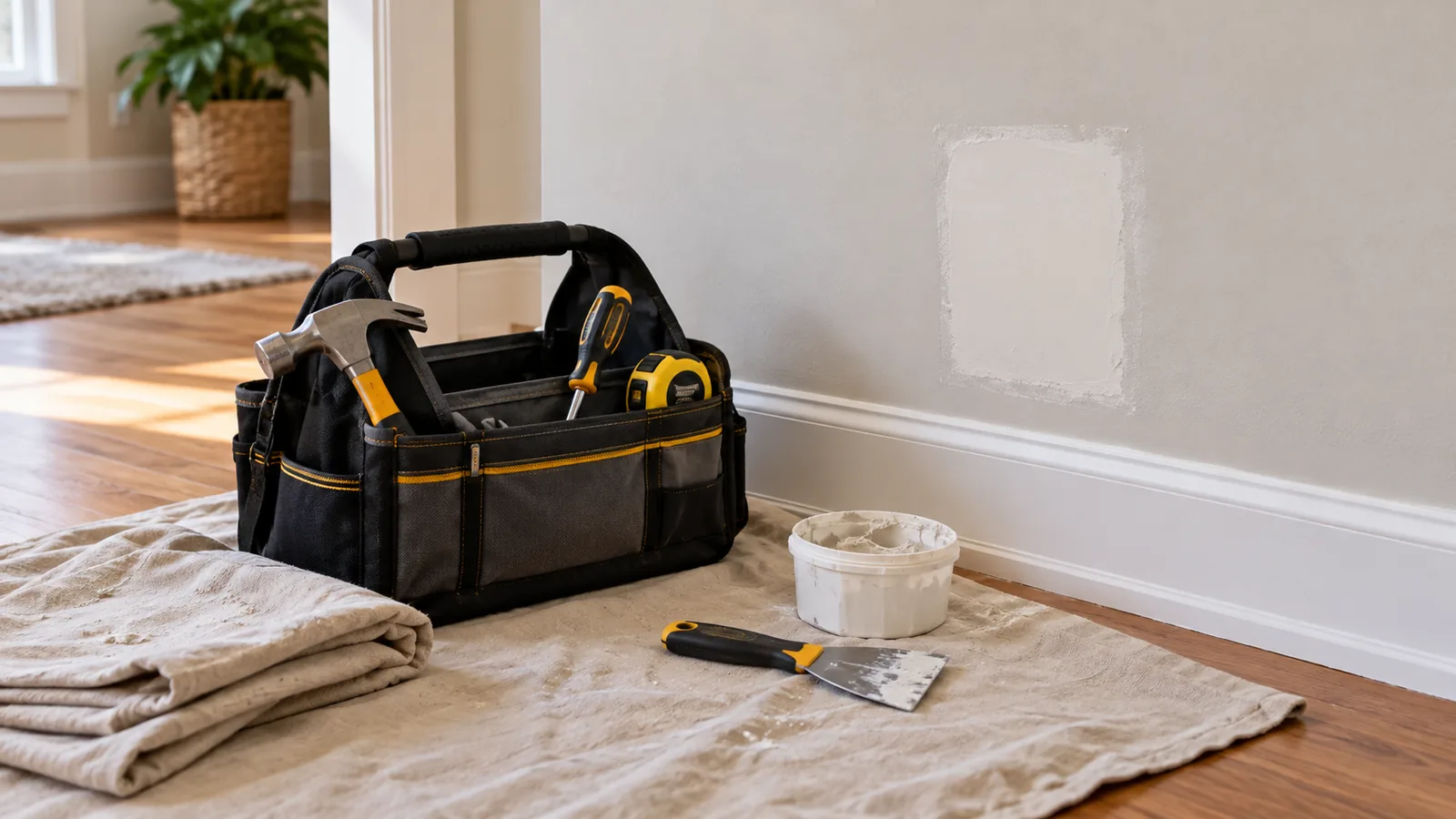
Caulk Is for Joints, Not for Every Crack
Caulk is useful where two suitable materials meet and a flexible sealed joint is appropriate. A crack running through stucco, concrete or drywall may require a different repair because the problem exists within the material rather than at a joint.
The first step is to identify whether the opening is actually a sealant joint or another type of failure.
Failed Sealant Should Be Evaluated Before New Material Is Added
Old caulk can shrink, split, lose adhesion or become brittle. Applying new sealant over failed material can leave the original bond problem underneath. The joint may need cleaning and removal of loose material before a new sealant can be considered.
The amount of removal depends on the condition of the existing joint and the surfaces around it.
Interior Joints Are Usually About Finish and Movement
Trim-to-wall joints, molding transitions and other interior gaps can affect the visual line before painting. Suitable caulking can help create a cleaner transition where materials meet. It should not be used to fill large structural gaps or compensate for damaged trim.
For trim-focused finish work after the joint is prepared, see Trim, Baseboard & Crown Molding Painting.
Exterior Joints Add Weather Exposure
Exterior joints around trim, siding transitions and other penetrations can face sun, rain and repeated movement. The sealant choice and joint condition therefore matter more than simply matching paint color. A failed exterior joint may also be part of a broader moisture problem.
If recurring water entry is the main concern, review Waterproofing instead of assuming caulk alone will solve it.
Stucco and Siding Cracks Need the Correct Repair Path
A crack in stucco may need Stucco Repair & Painting rather than a bead of sealant. Siding defects can also require repair of the material or assembly. Caulking works best when the joint itself is the serviceable component.
The project should identify the substrate before choosing the repair material.
Paint-Ready Sealed Joints
Once a suitable joint is cleaned, sealed and ready for coating, the final paint can be coordinated with the surrounding surface. Cure requirements and paint compatibility should follow the selected material rather than an assumed same-day sequence.
For broader exterior finishing after preparation, use Exterior Painting.
Once the surface is ready for an interior finish, interior painting carries the project into the painting stage without folding that work into CAULKING & SEALING. For the broader service family around this task, Surface Preparation & Repairs shows the parent scope and neighboring options without expanding this page beyond its purpose.
FAQ
Can every exterior crack be caulked?
No. Some cracks belong to stucco, concrete or another substrate and require a different repair.
Can new caulk be applied over old caulk?
Loose or failed material should be addressed first. Suitability depends on the joint condition and existing sealant.
Does caulking stop all water leaks?
No. A sealed joint can address a suitable gap, but recurring water entry may involve a broader waterproofing or building-envelope issue.
Where is caulking and sealing available?
FL-GoodHome serves Hollywood, Broward County and nearby South Florida.