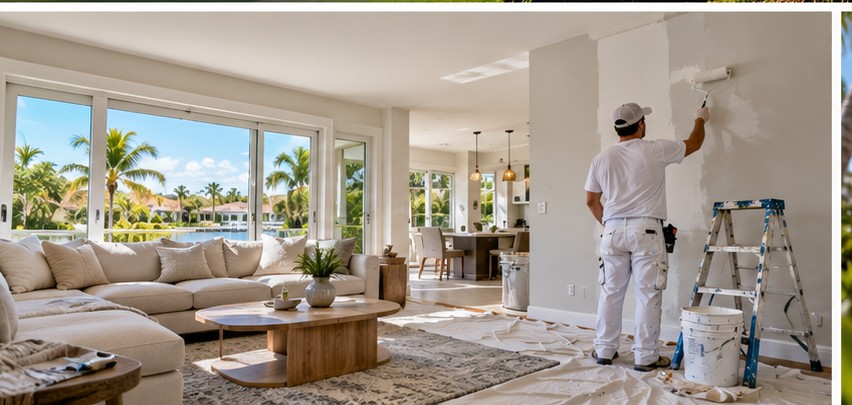
Trim Painting Is Detail Work, Not Broad Wall Painting
Baseboards, crown molding, door casings and decorative trim are narrow surfaces with edges, corners and repeated profiles. Brush marks, old drips and rough joints are easier to notice on those details than on a large wall. The scope should therefore identify which trim elements are included and whether the surrounding walls are staying as they are or being repainted at the same time.
For a larger room repaint, use Interior Painting. This page stays focused on the trim itself.
Existing Paint Condition Determines the Prep
Trim may have multiple older coatings, chips at corners, dents from furniture, open joints or glossy surfaces that need proper preparation before another finish is applied. Loose material should be addressed, and transitions should be smoothed enough that the new coat does not simply highlight old defects.
The amount of sanding, filling or caulking depends on the condition presented. FL-GoodHome does not treat every piece of trim as though it begins from the same surface.
Caulk Joints Affect the Finished Lines
Where trim meets walls, ceilings or adjoining pieces, failed or separated caulk can make even a fresh paint job look unfinished. Small joint corrections can be part of preparation when appropriate. Broader sealing problems or joints outside the trim-painting scope may require a separate Caulking & Sealing service.
The finished result depends on both the coating and the lines around it.
Baseboards Take Different Wear Than Crown Molding
Baseboards see shoes, vacuums, furniture and floor-cleaning activity. Crown molding is usually touched less but is more exposed to angled light and visible joint lines. Those differences can influence preparation and finish selection even when both are painted the same color.
A useful scope separates the conditions by trim type instead of assuming all molding has identical wear.
Color and Sheen Can Change the Architecture of a Room
Trim can blend with walls, create a deliberate contrast or connect several rooms through one repeated finish. Higher sheen may emphasize profiles and make cleaning easier in some areas, but it can also reveal dents and unevenness. The final choice should work with the wall color, the room’s lighting and the current condition of the woodwork.
If the project involves a broader palette decision across several rooms, Color Consultation can be planned separately.
Painted Trim vs. Natural Wood Finish
Some trim is meant to stay opaque and painted. Other woodwork may be better suited to stain or clear finish when the grain is part of the intended appearance. If the goal is to preserve visible wood rather than coat it with paint, see Wood Staining & Varnishing.
The existing material and finish should guide that choice before preparation starts.
For the broader service family around this task, Painting shows the parent scope and neighboring options without expanding this page beyond its purpose. When broad surface unevenness becomes the main issue, skim coating covers the leveling step before the final finish is planned. When cabinetry becomes a separate refinishing decision, cabinet painting keeps that scope distinct from TRIM, BASEBOARD & CROWN MOLDING PAINTING. If localized wall or ceiling damage becomes the primary problem, drywall repair covers that repair before finish work continues.
FAQ
Can trim be painted without repainting the walls?
Yes. Trim can be a stand-alone project when the surrounding wall finish is staying in place.
Do open joints need to be caulked before painting?
Where suitable, joint preparation can be part of the trim scope. Larger or unrelated sealing problems may need their own service.
Can stained wood trim be painted?
Sometimes. Suitability depends on the existing finish, wood condition and the preparation required for an opaque coating.
Where is trim painting available?
FL-GoodHome serves Hollywood, Broward County and nearby South Florida.